Auragen docs
Auragen docs

Getting Started

OverviewInterfaceNode GraphParameters and Controls

Operators

Post Effects

Color FX

Gradient ColorizerHue ShiftPosterizeColor BalanceDuotoneColor Key

Blur

Gaussian BlurMotion BlurRadial Blur

Distortion

Chromatic AberrationRGB DelayBarrel DistortionRippleSpherize

Warp

Sin WarpTwirlBulgePinchTurbulence WarpKaleidoscopeEscher DrostehyperWARPMöbiusWARPliquidWARPTime Warp

Morphology

Morphology

Stylize

GlitchSharpenEmbossSurface LightSSAOFilm GrainPixellatePointillizeHalftoneCel ShadingEdge DetectPixel SortBloom / Glow

Other

Anti-AliasMosaic TilingSubdivision StretchequiDome
3D PreviewperformMODE
Effects

Film Grain

Adds animated grain to the picture.

The Film Grain node overlays moving noise, which breaks up flat gradients and gives a filmic texture.
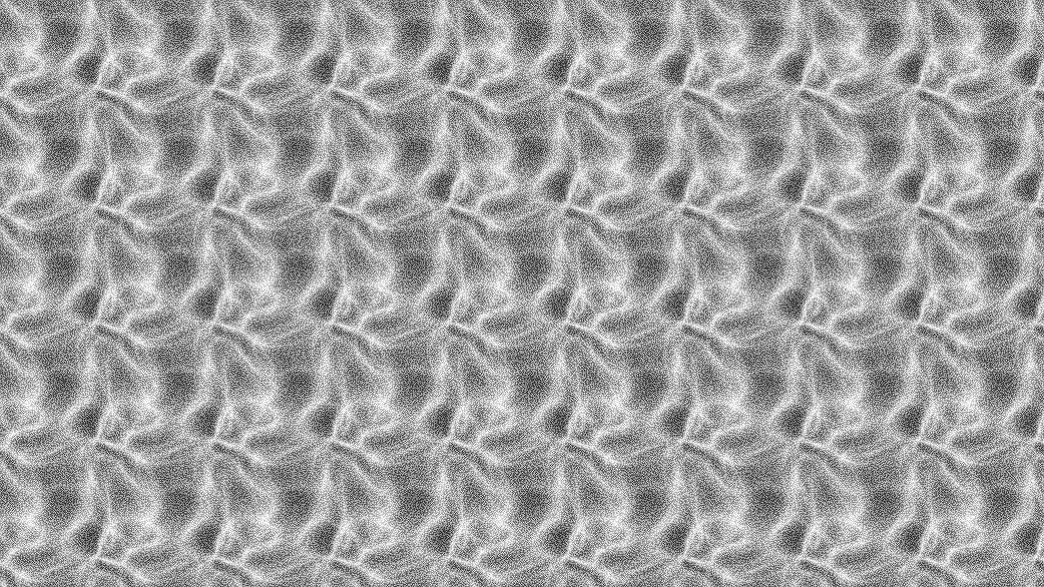
Film Grain

  • One control, Amount
  • Found in the node graph under Post FX → Stylize
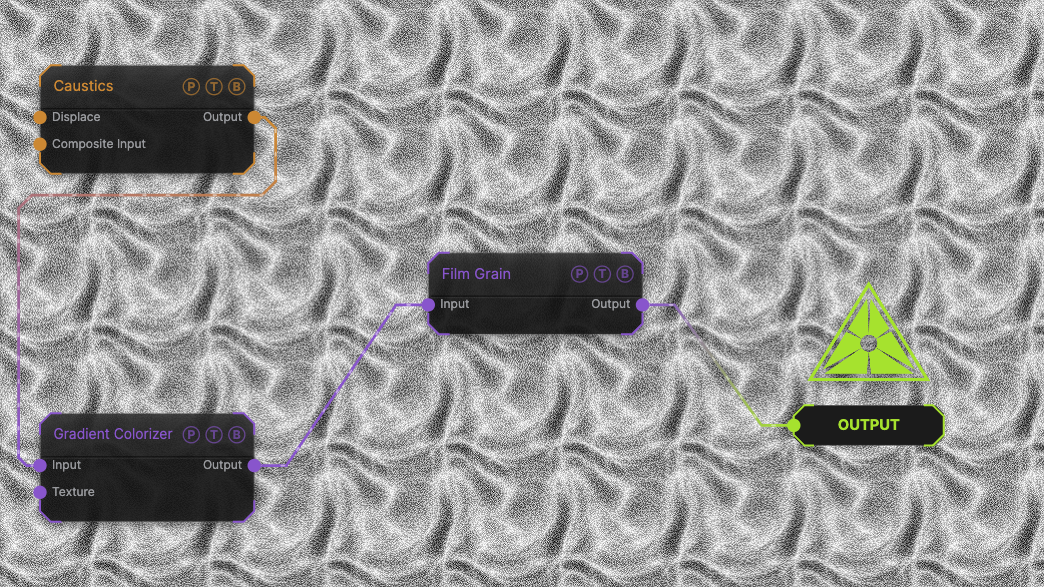
Example patch — drag onto the app to load

The image on the right is the example patch itself. Drag and drop it onto the app, or load it with File → Load, to open the full graph. A Caustics field, run through a Gradient Colorizer, at the default amount.

Inputs and outputs
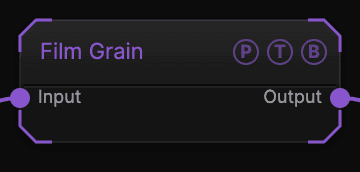
Film Grain node

PortTypePurpose
InputTextureThe picture to process.
OutputTextureThe result.

Parameters

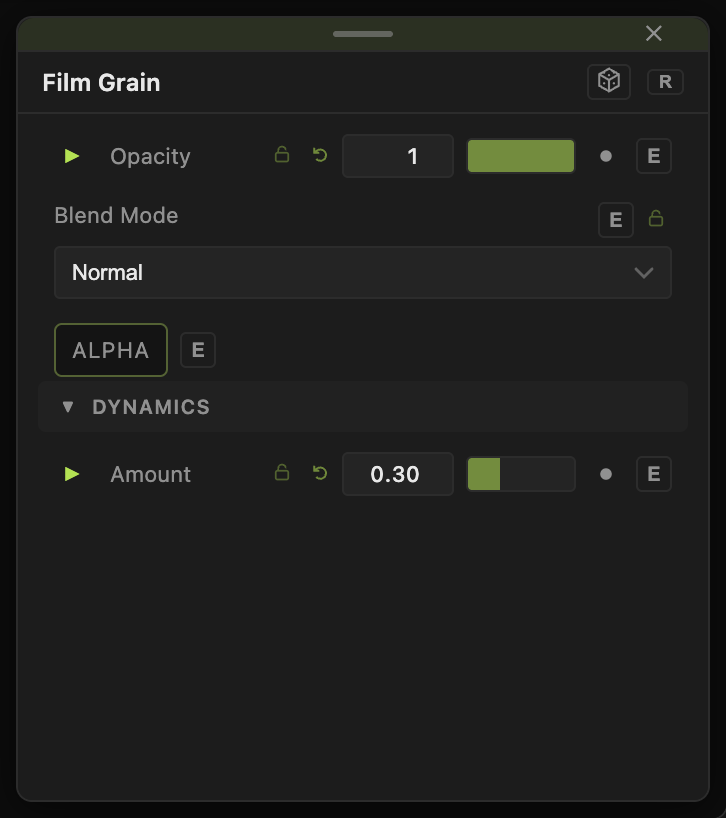
Film Grain parameters

Opacity, Blend Mode, and Alpha are the standard operator header; see Parameters and Controls.

  • Amount (0–1, default 0.3) — grain strength.

Every slider has a per-parameter animation bar, so it can be animated, audio driven, or MIDI mapped.

Examples

Dither gradients — Amount 0.05 as the last node before the Output to hide banding.

Troubleshooting

The grain is static — global animation is paused.

Related

Glitch

Snow and scanlines.

Halftone

A printed texture instead.

SSAO

Screen-space ambient occlusion computed from the picture or a wired depth texture.

Pixellate

Reduces the picture to large square pixels.

On this page

Inputs and outputsParametersExamplesTroubleshootingRelated