3D & SimulationSurface Operators
Audio (FFT)
Displaces by a chosen frequency band in five modes: pump, spectrum ribbon, rings, travelling wave, or jitter.
The Audio (FFT) deformer moves the mesh with sound.
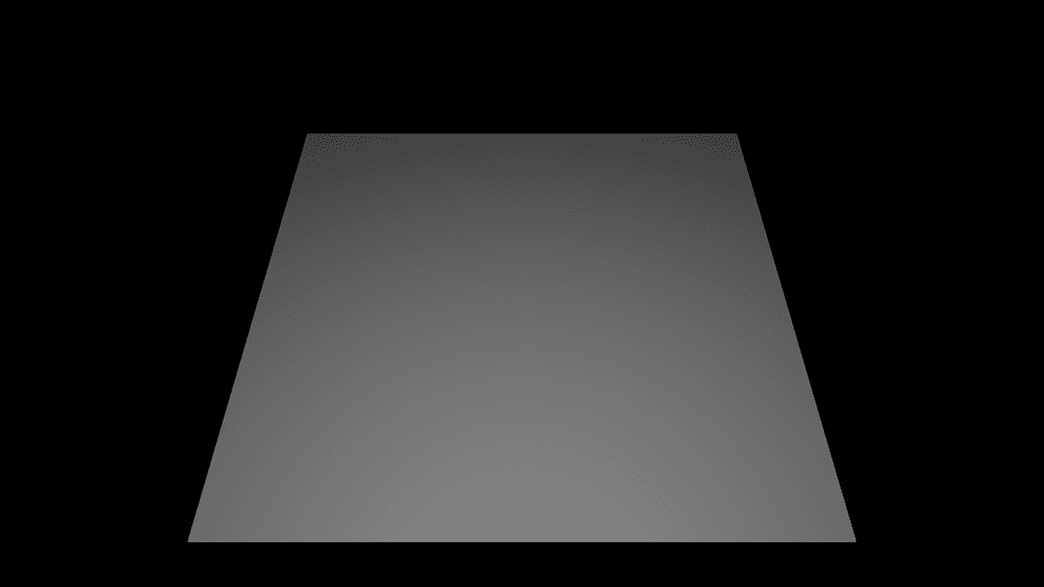
- Found in the node graph under Surfaces → Deformers
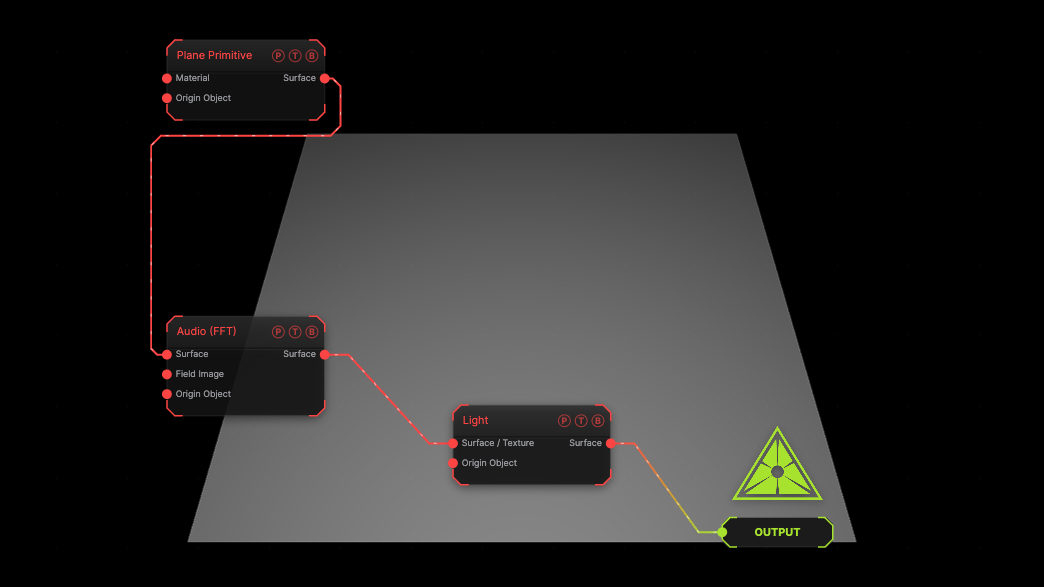
The image on the right is the example patch itself. Drag and drop it onto the app, or load it with File → Load, to open the full graph. A subdivided sphere with the deformer at its defaults, under a Light.
Inputs and outputs
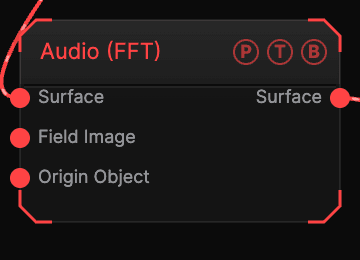
| Port | Type | Purpose |
|---|---|---|
| Surface | Surface | The mesh to deform. |
| Field Image | Texture | A texture read by the Image field shape. |
| Origin Object | Surface | A Null to parent to. |
| Surface | Surface | The deformed mesh. |
Parameters
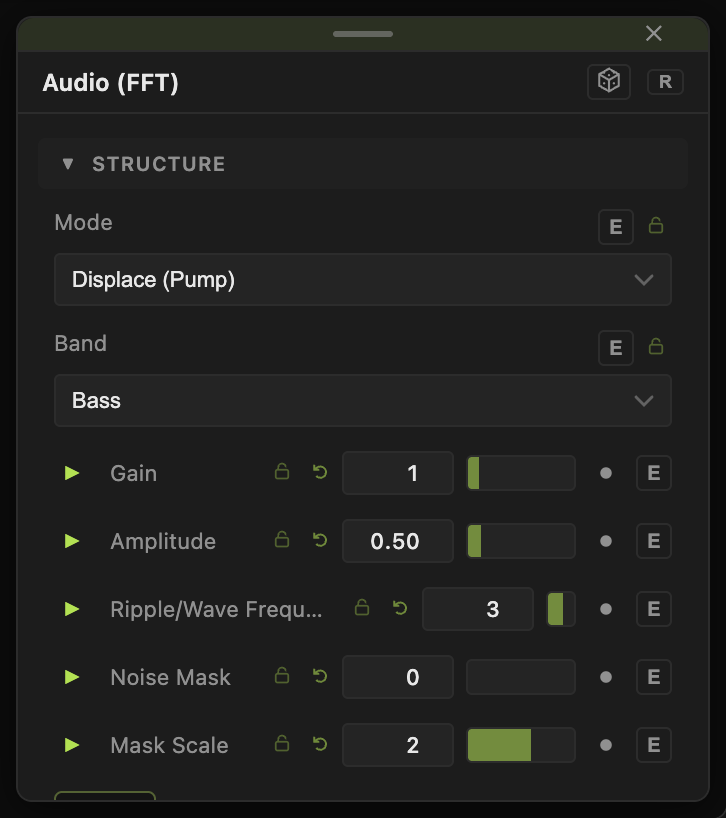
- Mode — Displace (Pump) (default), Spectrum (EQ Along Axis), Ripple (Rings), Wave (Traveling), Jitter (Noise Shake).
- Band (Bass default, or Custom Region with Region Low / High Hz), Gain (default 1), Decay (default 0.85), Amplitude (default 0.5).
- Axis (Spectrum/Wave), Spectrum Spread, Mirror Spectrum, Ripple/Wave Frequency, Motion Speed, Noise Mask, Mask Scale.
Field
- Field (default off) — limits the deformer to a region. Field Shape (Sphere, Box, Plane, Image), Field Size, Falloff, Inner Radius, Invert Field, Field Follows Mouse, Image Channel, and the Field Position / Heading / Pitch / Roll / Scale block.
- Position X / Y / Z, Rotate Heading / Pitch / Roll, Scale X / Y / Z, Uniform Scale — the deformer's own frame, which sets its axis.
Every slider has a per-parameter animation bar, so it can be animated, audio driven, or MIDI mapped.
Examples
Equaliser — a Plane, Mode Spectrum, Axis X.
Troubleshooting
It does nothing — the wire must land on the main Surface input, not a side port, and the mesh needs enough vertices. Raise the Primitive's Subdivision.
Nothing moves — audio input is not running.